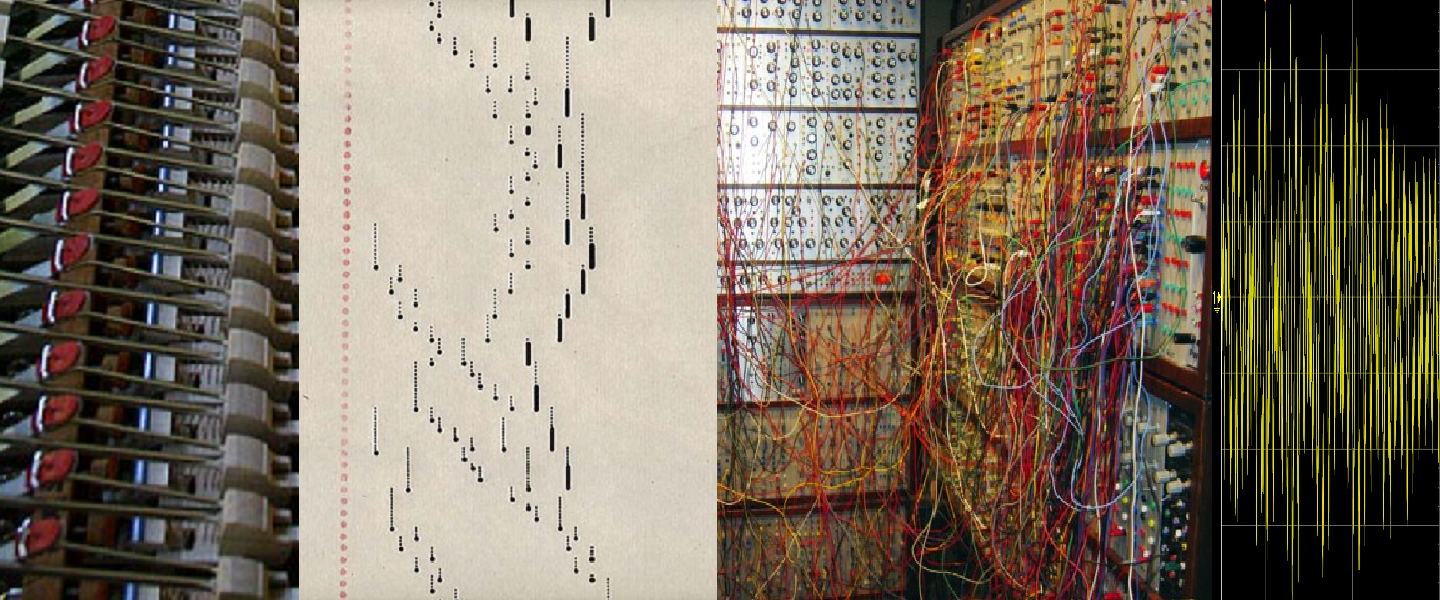
My previous experiments with Arduino tone() polyphony have led to a curious tangent, following some comments on a hackaday post featuring my original project that compared my project to Top Octave Generators. This describes how I used the same principle to create a simplified (and not very accurate or useful) Arduino Top Octave Generator as … Continue reading Arduino Top Octave Generator
Category: Project Categories
Arduino Tone Polyphony – Part 5
Ok, I thought I’d done with Arduino Polyphony for the time being, but something else came up today that I wanted to try. My post got a mention on the Hackaday blog and one of the comments has led me to a tweak that helps the tuning a little. https://youtu.be/lEaZhnjikfs Warning! I strongly recommend using old or … Continue reading Arduino Tone Polyphony – Part 5
Pi Pico PIO Poly Tone MIDI Keyboard
Following on from the Pi Pico PIO Poly Tone Keyboard here it is combined with one of the DIY MIDI Interfaces to give an eight note polyphonic MIDI tone module based on the Raspberry Pi Pico. In a follow-up post I develop a "pack" MIDI interface. https://youtu.be/uscUlgJ-NBk Warning! I strongly recommend using old or second hand equipment … Continue reading Pi Pico PIO Poly Tone MIDI Keyboard
Pi Pico PIO Poly Tone Keyboard
One of the obvious use-cases for the Raspberry Pi Pico's Peripheral I/O system (PIO) is in generating simple tones. Ben Everard from Hackspace Magazine did exactly that. You can read the full tutorial here or in Hackspace Magazine Issue 40. All the code for his PIOBeep.py can be found on GitHub here, and he leaves … Continue reading Pi Pico PIO Poly Tone Keyboard
MIDI In for 3.3V Microcontrollers
I have a number of microcontrollers now that use 3.3V logic: Raspberry Pi Pico Adafruit Feather Adafruit Circuit Playground Express BBC Micro:bit So far, I've look at MIDI OUT functionality, so now its time to look at MIDI IN, based on the circuit from my Simple MIDI Monitor. This project shows how to build your … Continue reading MIDI In for 3.3V Microcontrollers
Arduino Tone Polyphony – Part 4
In this final (for now) part of my Arduino Tone Polyphony project I'm returning to part 2 which was creating a stand-alone, full 12-note polyphonic tone keyboard with an Arduino Uno and committing it to an Arduino Shield using a proto-shield. Warning! I strongly recommend using old or second hand equipment for your experiments. I am … Continue reading Arduino Tone Polyphony – Part 4
Arduino Tone Polyphony – Part 3
Having achieved my full 12-note polyphony both over MIDI and using built-in keyboard encoding, the last part of this experiment was to see what range was possible using this method for tones. This project manages four octaves with 12-note polyphony and tuning that, whilst isn't perfect, isn't too bad either. https://youtu.be/Vf4GcZHLVJQ Warning! I strongly recommend … Continue reading Arduino Tone Polyphony – Part 3
Arduino Tone Polyphony – Part 2
There were two enhancements to my Arduino Tone Polyphony project I was keen to explore. One was to expand the MIDI range of notes and one was to "build in" a keyboard. I have managed to create an experimental version that can support four octaves over MIDI, but tuning needs some work, so I'm not ready … Continue reading Arduino Tone Polyphony – Part 2
Pi Pico MIDI Matrix Decode – Part 4
I'd left the Pi Pico MIDI Matrix Decode project essentially working but with a ghosting multiple keypresses problem. I was just going to let it go, but then I decided I just couldn't leave it there, so I had to take another look. Warning! I strongly recommend using old or second hand equipment for your experiments. … Continue reading Pi Pico MIDI Matrix Decode – Part 4
Single Pin MIDI Channel Selector – Part 2
As I mentioned in the Single Pin MIDI Channel Selector it would be nice to use a "DIP switch" on a small circuit board to give me my MIDI channel selection switch. Here is a small board that can plug directly into an Arduino's headers. Warning! I strongly recommend using old or second hand equipment for … Continue reading Single Pin MIDI Channel Selector – Part 2
 Simple DIY Electronic Music Projects